
The familiar chime of a pickaxe striking ore echoed through the dim corridors of the Mines. For Affectionate_Way_572, a seasoned Stardew Valley farmer, it was just another routine afternoon—dodging slimes, cracking open geodes, and stuffing pockets with precious gems. But when a swarm of Dust Sprites caught them off guard on level 87, the screen glowed red, a dreaded knock-out message appeared, and the backpack suddenly felt agonizingly lighter. In the blink of an eye, 14,100 gold vanished. In a game celebrated for its cozy, low-stakes rhythm, such a loss feels almost medieval, a stark reminder that even sunshine-soaked Pelican Town has teeth.
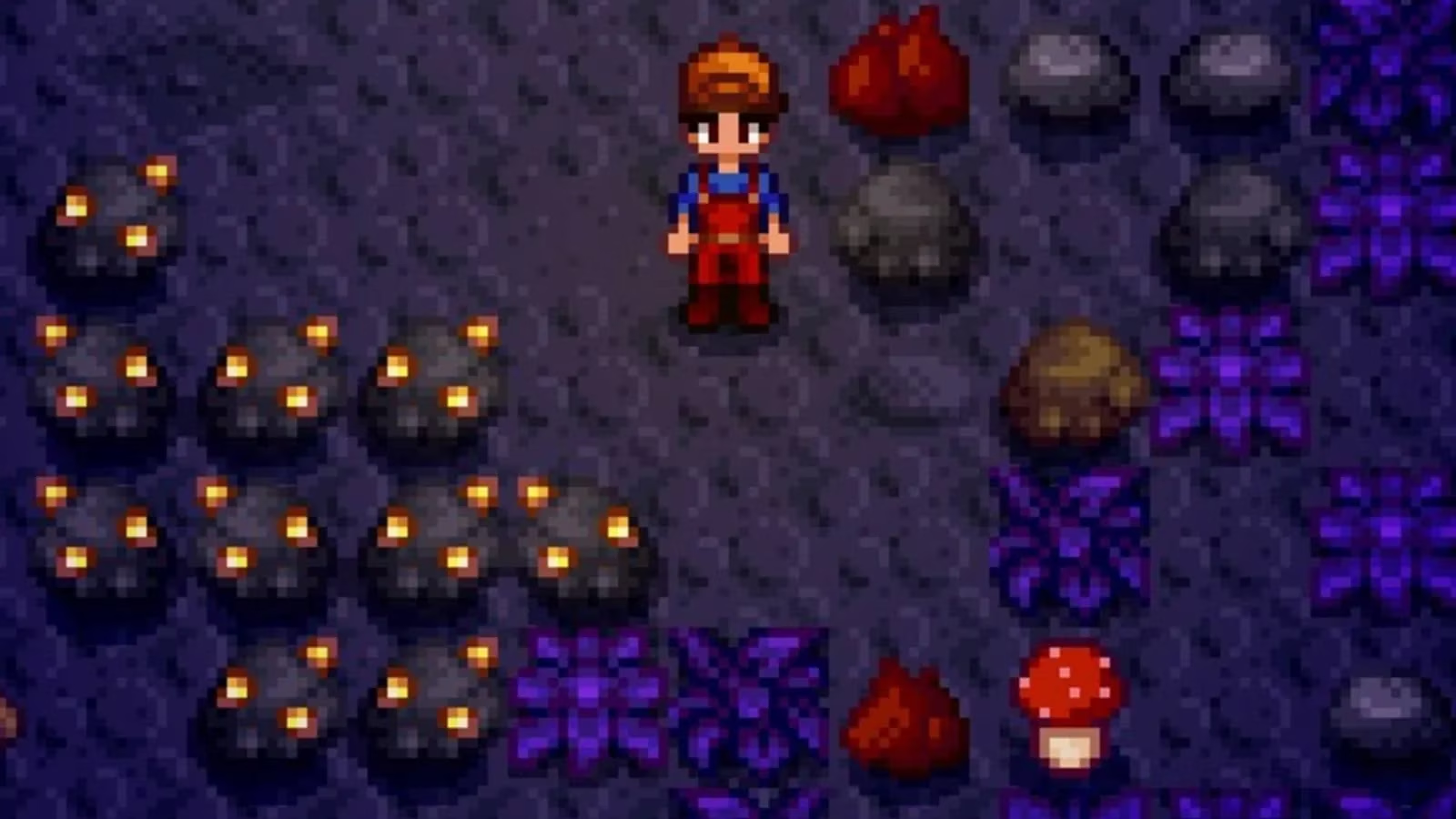
Stardew Valley has enchanted millions since its 2016 debut, effortlessly blending farming, fishing, foraging, and combat into a pixel-art tapestry that hums with charm. Its barrier to entry is a gentle slope; anyone can plant parsnips and pet chickens. Yet beneath the surface lies a mechanical spine that can snap without warning. The Mines, in particular, are a crucible of high-risk, high-reward gameplay. Players descend floor after floor hunting for copper, iron, gold, and the elusive iridium, all while managing health, energy, and an increasingly crowded inventory. The loss Affectionate_Way_572 suffered wasn’t a glitch or a prank—it was the result of a deliberate design choice that has haunted countless farmers: there is no bank, no chest, no piggy bank where hard-earned gold can be deposited for safekeeping. Every single coin you earn stays in your pocket, vulnerable to the game’s punishing death and fainting penalties.
The mechanics are notoriously strict. If a player passes out from exhaustion or is defeated in combat, they typically lose up to 10% of their on-hand gold, capped at 5,000 gold before the 1.5 update, later raised to 15,000 gold in updates that followed. For Affectionate_Way_572, who was sitting atop a fortune of over 4 million gold, the 14,100 deduction wasn’t ruinous—but it was close to the absolute maximum penalty. That proximity stings. Imagine spending weeks aging starfruit wine in your cellar, perfecting your truffle oil empire, only to have a single ill-timed serpent strike undo a chunk of that labor. It’s a lesson in humility delivered by a game most people associate with wholesome vegetable plots and dance festivals.
In the wake of that fateful Reddit post, the community rallied, swapping tales of financial woe like war veterans reminiscing about close calls. One player recounted losing 120,000 gold after an ill-fated Skull Cavern run back in 2019, a sum that still haunts their farm’s ledger. Another spoke of a multiplayer session where a friend’s death in the Volcano Dungeon drained nearly the entire shared treasury. These stories underscore a universal frustration: Stardew Valley’s economy is robust, yet its storage logic treats gold like a stack of stone rather than a currency. You can stash wood, ore, and even weapons in color-coded chests, but the very coinage that fuels your agricultural empire remains exposed.
The silver lining? The community’s collective wisdom is a treasure in itself. Seasoned miners now swear by a portable survival kit: 🍄 Life Elixirs crafted from purple mushrooms, 🌟 Iridium-quality cheese (which restores nearly a full health bar with no buff cancellation), and, most crucially, an always-equipped 🧿 Warp Totem. The Farm Totem’s instant teleportation has saved more fortunes than any armor piece. More cautious players adopt a “banking by proxy” strategy, deliberately spending gold on expensive seeds, materials, or the expensive 🗿 Statue of Endless Fortune before venturing into danger, effectively reducing their liquid holdings to near zero. It’s a clunky workaround, but until a true bank arrives, it’s the best defense against the capricious gods of RNG.
This longing for a formal banking system has become one of the community’s most persistent requests. In 2024, the massive 1.6 update delivered a trove of new content—desert festivals, mastery perks, and an expanded late game—but no bank materialized. Enthusiasts imagined a vault room at Pierre’s or a new building at the Carpenter’s Shop where gold could accrue interest or simply sit untouched. Some modders have already filled the gap on PC, creating functional banks that integrate seamlessly with the UI, but console and mobile players remain at the mercy of Eric Barone’s vision. With 2026 well underway and the game’s 10th anniversary approaching, fans are once again whispering about a possible 1.7 update. Could a bank finally emerge from the drawing board? The developer has remained characteristically quiet, but the hope is alive, flickering like a torch in the Mines.
Until that day, every descent into the depths carries a silent warning: check your pockets. Stardew Valley’s gentle exterior can lull you into forgetting that the valley holds dangers as real as the profits. Affectionate_Way_572’s 14,100-gold heartbreak is a parable that echoes through farmhouse kitchens and Skull Cavern entrances alike. It’s a testament to the game’s masterful fusion of comfort and consequence, a world where even the most prosperous farmer must still brave the dark, pickaxe in hand, knowing that fortune can turn as swiftly as a bat’s wing. So next time you hear that siren call of gold ore twinkling on a lower level, maybe pause. Pop open a bottle of your finest goat cheese, clutch that warp totem tightly, and ask yourself: is today the day I risk it all?