
As a seasoned Stardew Valley farmer, I've seen my fair share of triumphs and tribulations. But nothing quite prepared me for the collective sigh of sympathy that echoed through the community recently. We've all been there, right? You spend an entire in-game year meticulously planning, building, and waiting for that perfect thunderstorm, only for the game's RNG to give you a cheeky wink and a single, lonely battery pack. That's the exact predicament one of our fellow farmers, Eastern-Spend-4438, found themselves in, and let me tell you, it sparked a whole new conversation about the fickle nature of Pelican Town's weather and those darn lightning rods.
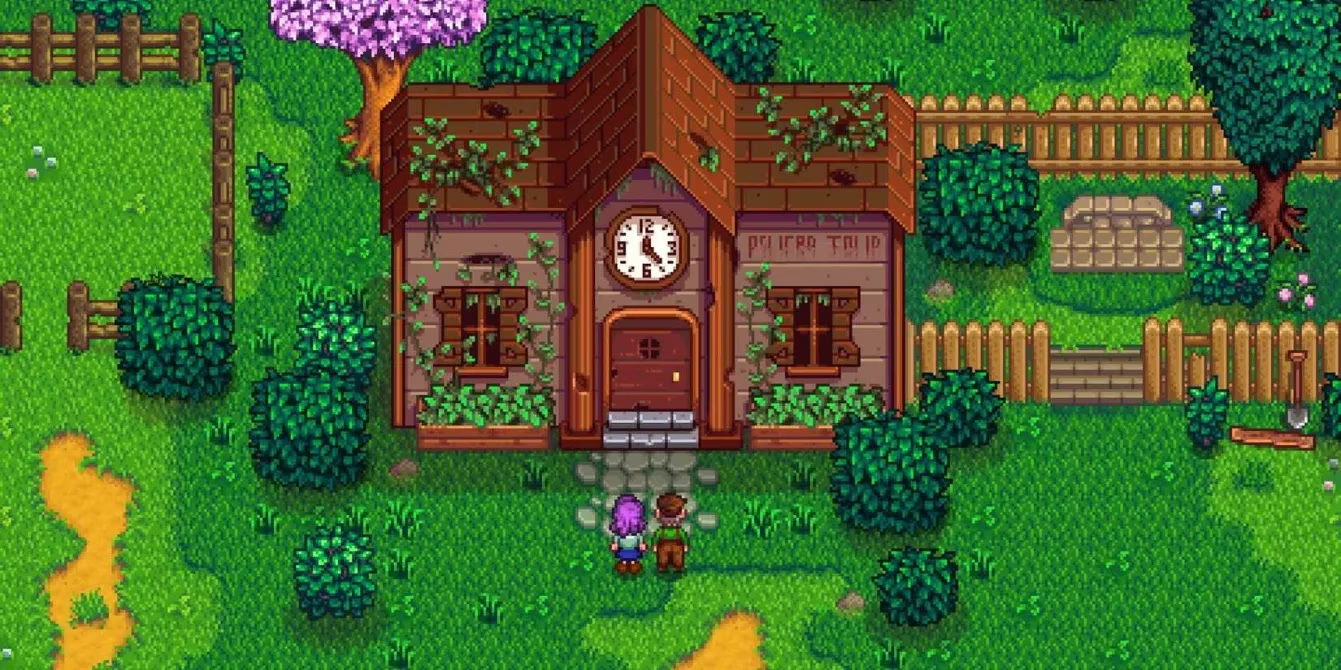
At its heart, Stardew Valley is a cozy escape—a place to tend crops, befriend chickens, and maybe woo the local doctor or artist. But beneath that pastoral surface lies a world of surprising depth, where farming gives way to quests involving magical creatures, ancient mysteries, and, yes, harnessing the raw power of a thunderstorm. The lightning rod is a perfect example of this layered gameplay. In theory, it's simple: craft a rod, place it on your farm, and hope lightning strikes it during one of the rare thunderstorms. When it does, poof! You get a battery pack, a crucial resource for unlocking advanced crafting recipes and, most importantly, accessing the enigmatic Ginger Island. For Eastern-Spend-4438, despite having a whole "array" of rods set up, the harvest was... well, let's just say it was underwhelming. A single battery pack after a year's wait. Ouch. Talk about a bad luck day!
⚡ Demystifying the Lightning Rod: It's All About the Odds
So, what gives? Why would a large setup yield such a paltry result? The core truth every farmer needs to accept is that lightning rods are, fundamentally, a game of chance. A thunderstorm itself isn't a daily occurrence, and even when the skies crackle, each rod only has a chance to be struck. But it's not pure, helpless randomness. Over the years, we've decoded ways to stack the deck in our favor. Here’s the lowdown:
-
Stay Awake! This is rule number one. Lightning will only strike while your farmer is conscious and roaming the world. Passing out at 2 AM is one thing, but going to bed early on a stormy day? That's just leaving money (or batteries) on the table. Our unlucky comrade mentioned staying up until midnight, which is good, but pushing to that 2 AM limit is often the key.
-
Luck is Your Best Friend (or Worst Enemy). The game's daily luck stat directly influences the number of lightning strikes. A high-luck day means more potential zaps for your rods. You can boost your luck by:
-
Eating certain foods (like Lucky Lunch or Pumpkin Soup).
-
Carrying the Special Charm (found after a secret note quest).
-
Wearing a Lucky Ring.
-
-
Quantity Has a Quality All Its Own. Forget the old myths about rod placement mattering; it doesn't. What matters is how many you have out. Once a rod is struck and produces a battery pack, it enters a cooldown. Having more rods means more available targets for subsequent strikes in the same storm. It's simple math, really.
-
Seasonal Reminder: Don't bother looking to the skies in Winter. Thunderstorms simply don't happen. Use that time to craft more rods for the coming year!
🌱 The Beauty of Stardew: A Game for Every Farmer
This whole lightning rod saga highlights what makes Stardew Valley such an enduring classic, even looking back from 2026. It's a game of beautiful contrasts. You can play it as a chill, surface-level farming sim, focusing on your relationships and your parsnip profits. Or, you can dive deep into the granular mechanics, optimizing every square of your farm, min-maxing your luck, and treating battery pack production like a serious logistical operation. One player's relaxing pastime is another player's complex engineering project. And sometimes, that project yields one battery pack after a year of work... which, honestly, is its own kind of memorable story.
For players like Eastern-Spend-4438 and for all of us who've faced similar frustrations, these moments aren't just failures; they're learning experiences that add to the rich tapestry of the game. They send us back to the drawing board, to community forums, or to the Stardew Valley Wiki, digging deeper into the systems that make this world tick. The conversation around the post wasn't just about pity; it was a collective troubleshooting session, a sharing of hard-earned wisdom on how to better tame the storm.
So, what's the takeaway for any farmer looking to avoid a similar fate? Don't rely on hope alone. Treat lightning farming like you would any other crop. Prepare your field (with lots of rods), fertilize it (with luck-boosting items), and tend to it diligently (by staying awake during the storm). And maybe, just maybe, you'll be rewarded with more than a single spark of progress. After all, in Stardew Valley, there's always a new season, a new storm, and a new chance to get it right. Now, if you'll excuse me, I need to go check the weather forecast on my TV... and maybe eat a Lucky Lunch, just in case.