
For years, Stardew Valley farmers have stared at their ponds with hopeful eyes, waiting for a duck to take a dip. The feature arrived in update 1.5, but many players still believe swimming ducks are a myth. They are not. The problem is that ducks are independent little creatures. They wander, they eat, they occasionally stand on top of crops, but they rarely choose water unless conditions are perfect.
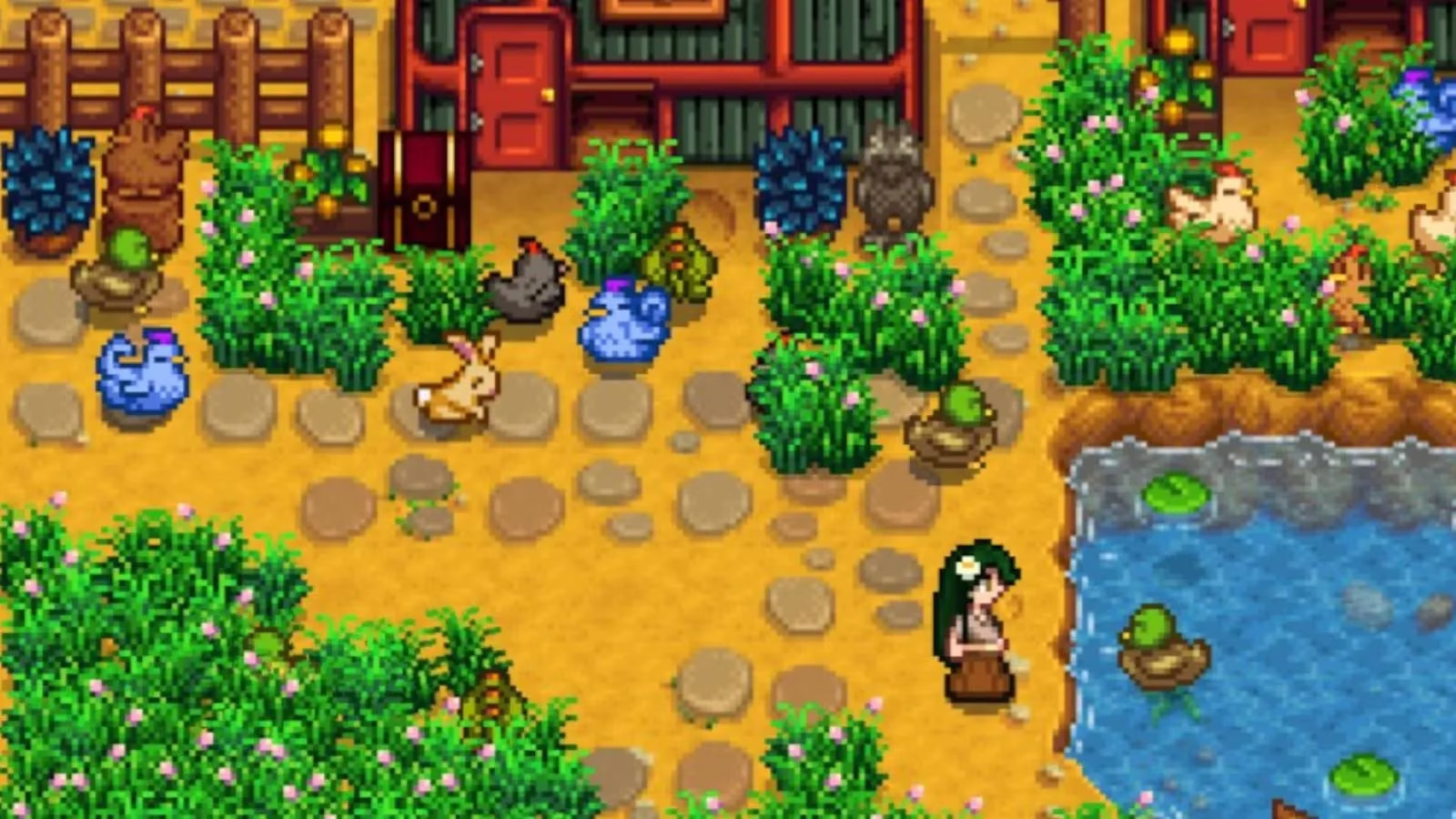
A Reddit user named oldeluke has finally cracked the code. Their method does not rely on luck. It relies on real estate and peer pressure. The idea is to move the chicken coop as close to a body of water as possible. The Riverland Farm is ideal for this, because water is everywhere. Then, the player seals off every other exit with a fence and a gate. On the opposite side of the water, a small patch of grass completes the trap. When the ducks emerge, the pond is the only path. The grass is the reward.
The setup looks like this:
-
Move the chicken coop near water.
-
Block the land side with a fence and gate.
-
Leave a strip of grass across the water.
-
Wait for the ducks to accept their fate.
-
Pet them first, because unpetted ducks refuse to swim.
Why does this work? A duck in Stardew Valley has simple programming. It decides where to wander based on available tiles and random chance. Water is only one option among many. By removing all other options, the player turns the pond into a highway. The grass on the other side adds incentive. Ducks love grass. It is essentially a duck vending machine placed across a moat.
There is one catch. An unpetted duck will not swim. This is not a bug. It is a gentle reminder that affection matters. Farmers who want a swimming show should start the day by clicking on each duck. It takes seconds. Alternatively, an Auto-Petter can handle it. But that item is rare and often more trouble to get than simply petting a duck.

Ducklings follow the same rules. If the setup is correct, tiny baby ducks will hop into the water too. Watching a duckling float across a pond is worth the effort. It may be one of the most adorable things in the entire game, and it costs nothing but a few pieces of wood for a fence.
| Situation | Solution |
|---|---|
| Duck ignores water | Check fencing and make sure no land exit remains |
| Duck will not move | Pet it first thing in the morning |
| No grass across the water | Plant grass starter on the other bank |
| Duckling not swimming | Use the same setup; ducklings follow adult rules |
Some farmers might ask whether this changes anything mechanically. It does not. Duck happiness, friendship, and egg production remain exactly the same. Swimming is purely cosmetic. But Stardew Valley is built on cosmetic joys. A duck on a pond is the same kind of small pleasure as a perfectly placed scarecrow or a cat sleeping on the porch.
The community has always loved uncovering these little secrets. ConcernedApe's game is packed with details that many players never notice. Some people play for hundreds of hours and still have not seen a duck swim. Thanks to oldeluke, that particular mystery can now be solved in one afternoon.
Robin can move the coop for a small fee, and she will do it without asking why a farmer suddenly needs waterfront property for poultry. The whole project takes only a few minutes. The result is a farm where every duck finally gets the chance to be a duck.
So if a pond has been duck-free for too long, the solution is not patience. It is landscaping. Fence them in, point them at the water, and enjoy the show. 🦆
According to coverage from Game Developer (Gamasutra), many “mystery” behaviors players chase—like getting Stardew Valley ducks to reliably swim—often come down to simple AI decision trees interacting with level layout. By constraining available tiles with fencing and placing a clear goal (grass) across a narrow water path, the player effectively removes competing wander options, turning a low-probability cosmetic action into a repeatable outcome driven by environment design rather than luck.