
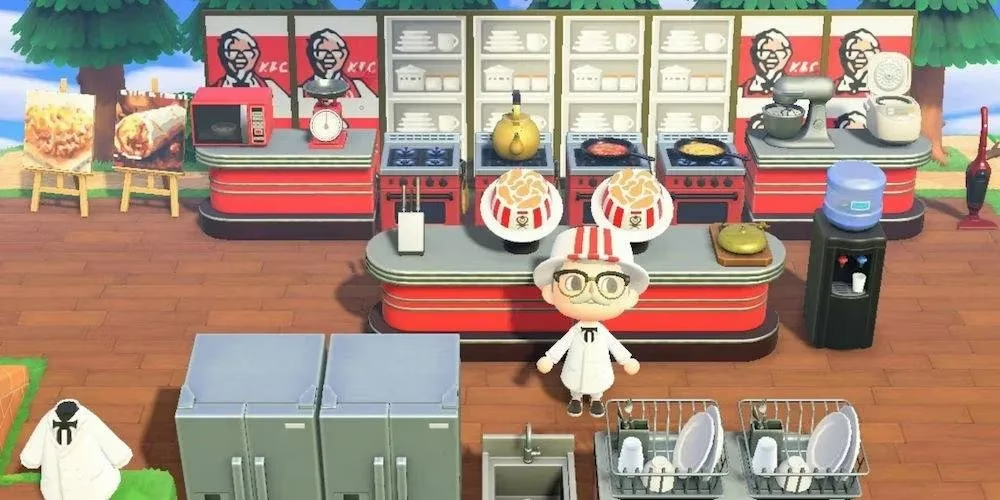
After an exhausting day of back-to-back meetings, a snarled commute, and a to-do list that never seems to shrink, the allure of home is almost magnetic. The sofa beckons, the controller waits, and logic says this is the moment to escape into something mindless. Yet for a staggering number of players in 2026, that escape doesn't lead away from labor—it leads straight into another shift. They fire up Animal Crossing: New Horizons to plant turnips and redeem Nook Miles, or they launch Powerwash Simulator to meticulously erase digital grime from a virtual patio. The question hangs in the air, heavier than a neglected laundry basket: What makes someone finish a real-life 9-to-5 only to punch into a digital one? The answer is far more layered than the pixels being scrubbed, rooted in psychology, emotion, and a deep human hunger for control.
The Dopamine of Digital Chores
At first glance, the appeal is baffling. No one is cutting a paycheck; no performance review waits at the end of the quarter. Yet the moment a virtual bridge is completed or the last speck of rust vanishes from a van, a wave of euphoria floods in. That rush is the classic quest-and-reward loop, stripped to its purest form. Unlike the often ambiguous victories of real work—Was that meeting productive? Did the spreadsheet matter?—in-game goals are concrete and instantly celebrated. A fishing rod snags a rare oarfish, and the character beams. A courtyard is power-washed spotless, and a satisfying ding seals the deal. It’s dopamine, served on-demand.
This looping gratification explains why titles like House Flipper, Farm Together, and the ever-expanding library of simulator titles continue to thrive in 2026. The tasks themselves might be ordinary, even tedious. But when a player chooses to do them, the emotional ledger changes. The chores become vessels for small, repeatable victories. Each weed pulled is a micro-win against entropy. That feeling is so potent that for many, it becomes a nightly ritual—a twilight hour where effort and reward finally align.
A Sanctuary of Control in a Chaotic World
Driving deeper, the compulsion to work inside a game taps into something more existential. The world outside is unruly. Newsfeeds overflow with headlines that defy prediction, and personal lives sometimes feel like they’re running on someone else’s algorithm. In these simulated jobs, however, control is handed back to the player with both hands.
Take The Sims 4, still one of the most fiercely modded and played life simulators years after its release. The player decides every inch of a home, every career path, and even the emotional arcs of each character. If a real day spiraled, the virtual day marches exactly as instructed. A farmer in Stardew Valley knows that if they water their crops today, the harvest will come in three days—guaranteed. That predictability isn’t boring; it’s balm. For those grappling with anxiety, burnout, or the lingering aftershocks of a post-pandemic society, the ability to dictate outcomes inside a glass screen offers a profound sense of peace. As one observer noted, “You can’t always control the outcome of how your day will go, but you can control what buttons you press.” That mantra keeps countless players logging in after hours, seeking a world where their choices finally carry unwavering weight.
Community and the Need to Connect
Even the most solitary virtual job eventually draws people together. A player wrestling with a tricky island layout in Animal Crossing can turn to a Discord server, a Reddit thread, or an in-game dream address swap and find instant camaraderie. Humans crave connection as urgently as they crave routine. When the shared language is a passion for perfect turnip prices or the ideal barn placement, bonds form quickly and warmly.
Stardew Valley, which celebrated its tenth anniversary in 2026 with a still-active multiplayer community, exemplifies this alchemy. You might be a lone farmer at dawn, but by midday you’re visiting a friend’s greenhouse or planning a wedding for an NPC. These interactions, though mediated by avatars, nurture real communication skills and ease loneliness. They transform a virtual job into a shared hearth. For many, the community that springs up around a game like Euro Truck Simulator 2 or the Farming Simulator series becomes a second family—one that never asks for a performance review.
Learning and Growth Hidden in Plain Sight
Beyond emotional rewards, simulated job games often teach tangible skills, sometimes in surprising ways. The strategizing required in Football Manager has been cited by actual football coaches as a career-launching tool, while Cities: Skylines imparts urban-planning literacy that can spark genuine academic interest. Even the simple act of prioritizing tasks in Overcooked sharpens real-time problem-solving.
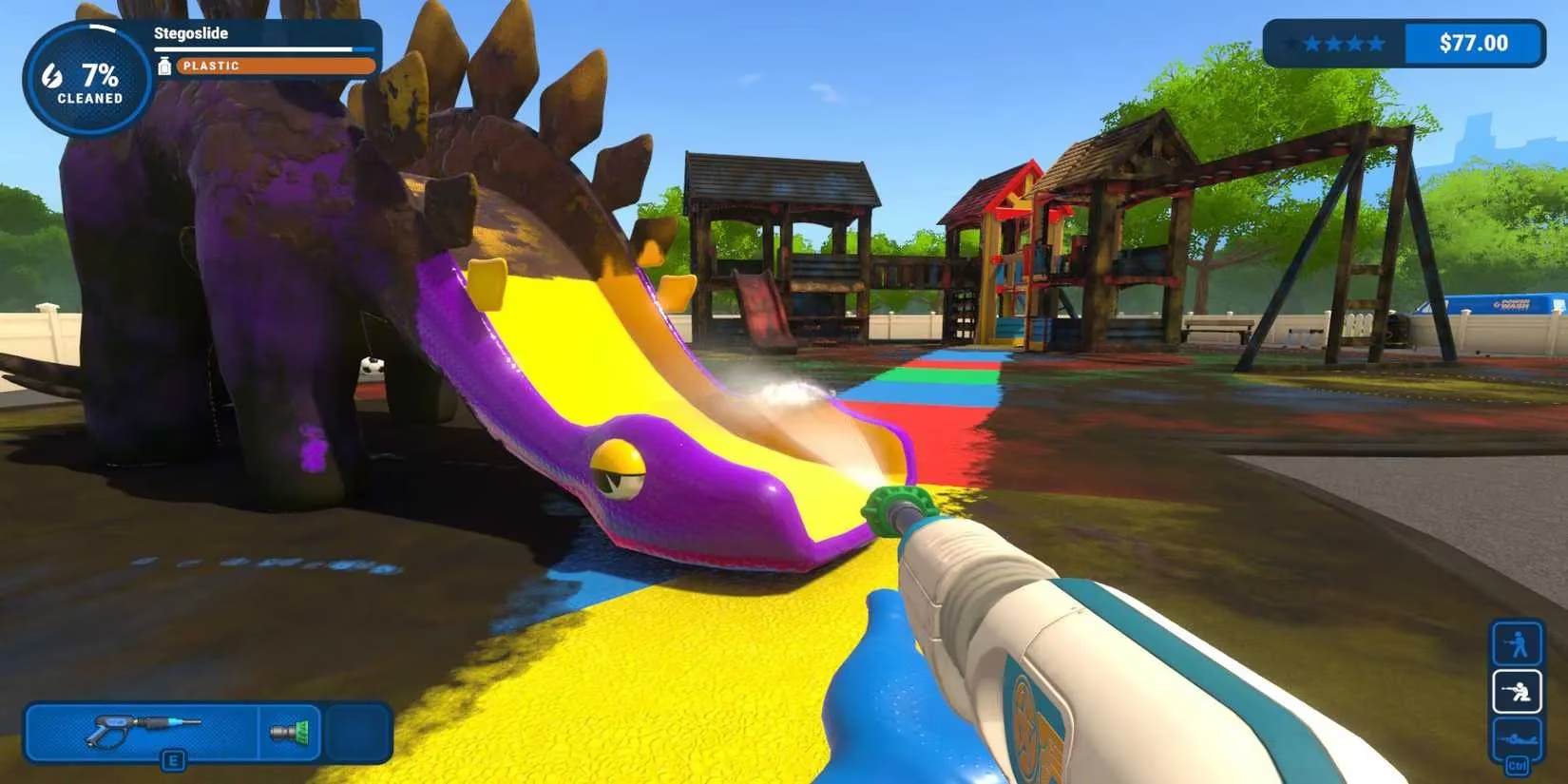
In 2026, as gamified learning becomes increasingly recognized, educators and therapists point to these titles as low-stakes training grounds. A teenager who masters Powerwash Simulator isn’t just zoning out; they’re practicing sustained focus and systematic thinking. A player juggling crops, mining, and friendship quests in Stardew Valley is absorbing time-management lessons that transfer to daily life. The line between work and play blurs not because the games are laborious, but because the labor inside them feels extraordinarily meaningful.
The Virtual Shift That Restores
So what brings a person home from a day of real work only to begin a second shift in a make-believe world? It’s never been about the work itself. It’s about reclaiming a piece of agency that the everyday world chips away. It’s about seeing a task through from start to finish and hearing that triumphant sound effect. It’s about typing a message to a stranger-turned-friend across the ocean, celebrating a new barn design or a freshly cleaned roof. We crave a life where our effort visibly matters—a life we can control, moment by moment. In these games, often labeled as cozy, simple, or even silly, players find precisely that. They log on not to escape reality, but to build a reality that finally feels like home.