
The calendar flipped to Summer, Year 1, 2026. I wiped sweat from my brow, gazing at the overgrown fields of my grandfather's old farm. After a modest spring of parsnips and potatoes, I was determined to turn this land into a gold-making paradise. With Pierre’s shop stocked with new seeds and the sun blazing high, I knew summer was the season of real opportunities. My goal? To find the most profitable crops, keep the townsfolk happy, and maybe brew something special in my keg shed.

I started modestly, filling a handful of tilled squares with wheat seeds. At just 10 gold apiece from Pierre, they felt like a safe bet. Wheat sprouted in four short days and stayed resilient through both summer and autumn, a clever dual-season crop. I had big plans for it: not just feeding my growing flock of chickens, but also feeding the kegs. Turning each sheaf into a frothy mug of beer was pure alchemy—what cost me a handful of coins now sold for 200 gold or more. Aged in a cask, it grew even richer. I tucked a few bottles into my backpack for Pam and Shane, who practically glowed when I handed them a cold one. Every other villager politely accepted it too. And when winter blizzards hit, I had stacks of golden wheat stored for animal feed and extra brewing, a safety net that kept money trickling in.

Next came hops, those vibrant green starters that I bought for 60 gold each. They took eleven tense days to mature, but after that first harvest, they delivered ripe cones every single morning until summer’s end—seventeen hauls in one season. The raw hops sold for a measly 25 gold, but that wasn’t my plan. I loaded them into my row of kegs and watched the liquid inside turn pale gold. Pale ale burst onto the market at 300 gold per bottle, and with my artisan profession, the price soared to 420 gold. I let a few bottles age longer in the cellar, and their value climbed even higher. While most townsfolk reacted to pale ale the same as beer, Pam had a special place in her heart for it, which made bribing her friendship wonderfully cheap.
My heart softened when I thought about Penny, the shy book-lover, so I planted a corner of poppies. I bought seeds for 100 gold each, and seven days later, the field blazed with crimson blossoms. Strangely, giving raw poppies as gifts made everyone except Penny wince—they were universally hated. But I learned a secret: baked into poppyseed muffins, the flowers became adored by Leah and liked by nearly everyone else. Even better, I placed a beehive right beside the patch. The bees collected poppy nectar, producing glistening jars of poppy honey. Regular honey fetched 100 gold, but poppy honey sold for 380 gold, or a sweet 532 gold with my artisan trade. That little corner became a buzzing goldmine.
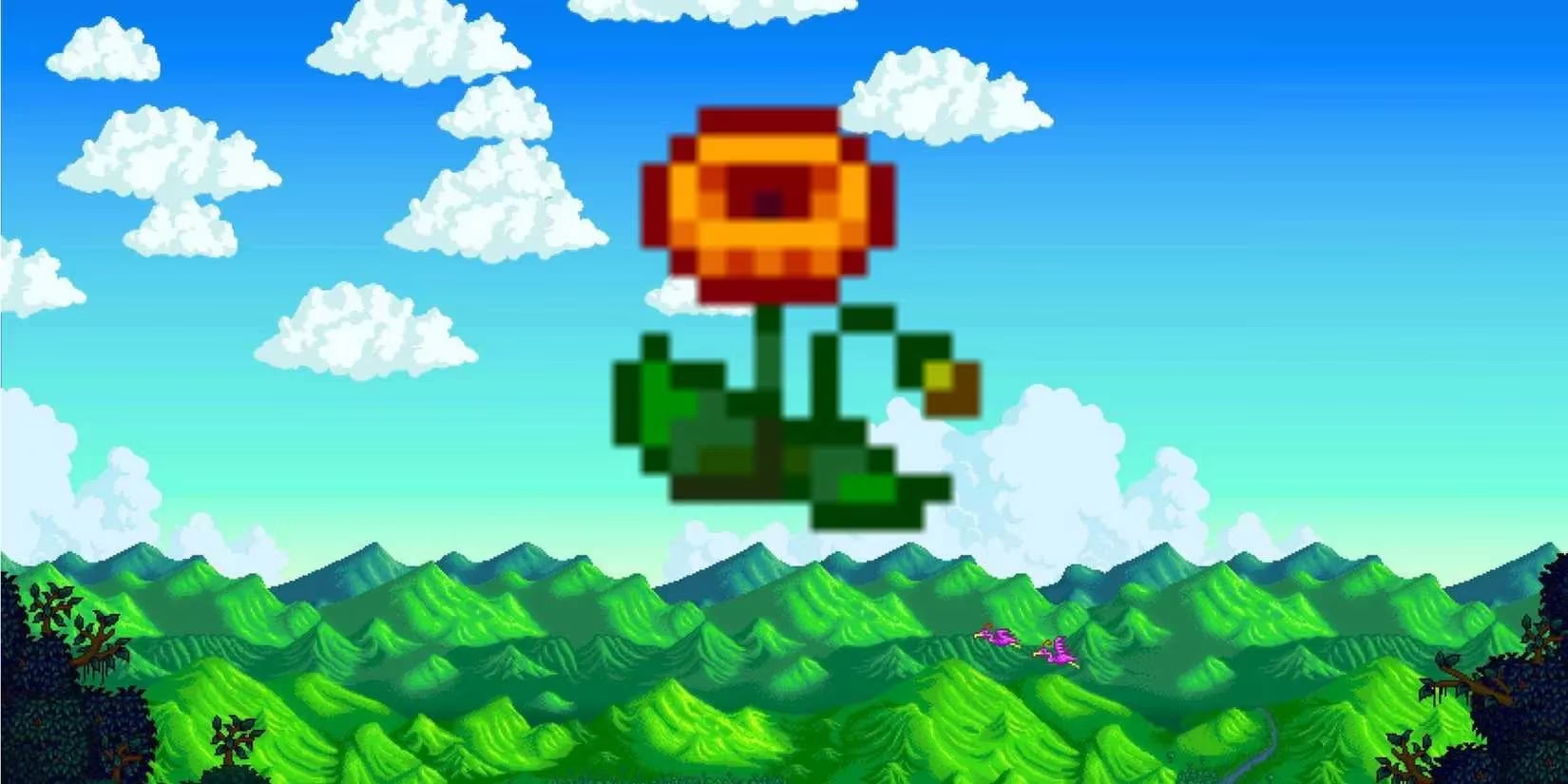
As the days flew by, I realized I needed crops that wouldn't die when autumn crept in. I sowed rows of corn, its seeds costing 150 gold. The stalks took a full fourteen days to mature, but then they produced an ear every four days, surviving both summer and fall. I turned plenty of corn into oil for stir-fries and radish salads, but it also made a thoughtful, neutral gift for almost every villager—a rarity in the valley. Compared to sunflowers, which I also tried, corn offered a steadier, larger profit and stood tall without needing replanting.
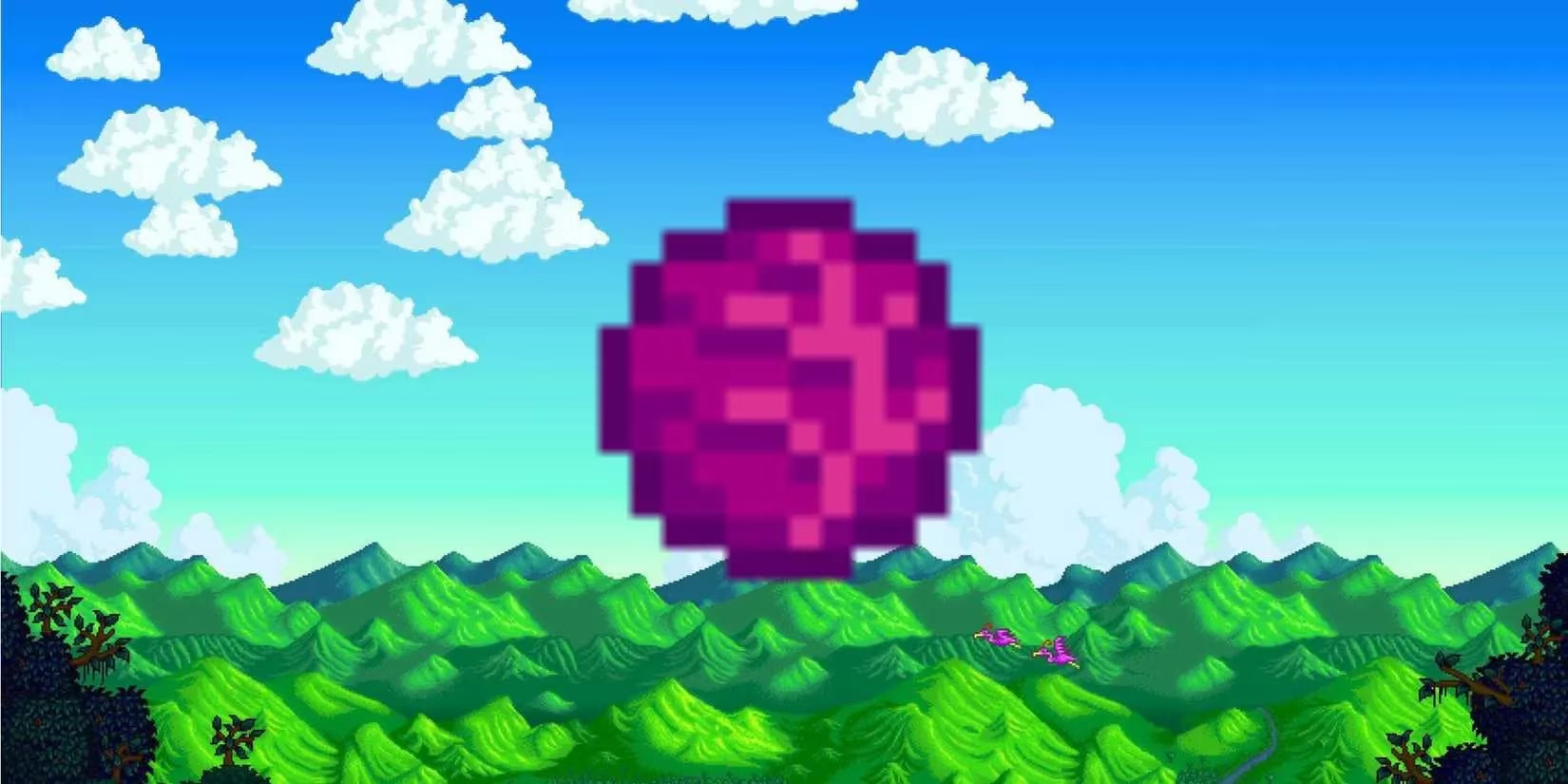
In year one, I gambled on a traveling cart offer: red cabbage seeds for 150 gold. Normally, you had to wait until year two to find them at Pierre’s for 100 gold. I planted them anyway, nursing them for nine days until the heavy purple heads emerged. The raw vegetable sold for 260 gold, but the real magic happened in the keg and preserves jar. Red cabbage juice sold for 585 gold, or a jaw-dropping 819 gold with the artisan profession. That single gamble paid off, and by the second summer, I had a whole field dedicated to juicing these violet beauties.
I didn’t ignore the smaller, quicker crops. Tomato seeds cost only 50 gold and produced fruit eleven days later, then every four days after that. I used them to cook fish stew and shrimp cocktails that restored my energy during long days in the mines. Hot peppers were even faster—five days to first harvest, then a fresh pepper every three days, often dropping doubles. Seed cost 40 gold, and the peppers sold for the same, so I didn't grow them for direct profit. Instead, I stuffed them into my pocket for Shane and Mayor Lewis, who both loved the fiery little gifts. Growing peppers built a fast bridge to friendship without needing any kegs or jars.

Then came the melons. I bought seeds for 80 gold and waited twelve days. The heavy, sweet fruits sold for 250 gold a piece, making them an effortless moneymaker. I sometimes sliced one open in the mines, restoring over 100 energy with each stack. In a moment of pure luck, a 3x3 grid of melon plants fused into a giant melon—a smiling, oversized fruit that gave me eighteen regular melons when I broke it with an axe. Even after summer ended, that giant melon stayed, a trophy and a promise of what patience could yield.
I turned a huge profit with blueberries, those tiny teal berries that came in clusters. Seeds cost 80 gold, and after thirteen days, I harvested at least three berries per bush every four days. A single plant yielded over 500 gold in a season, all without turning them into wine. I saved my kegs for rarer fruits while my blueberry patches quietly filled my wallet.

But the crown jewel of summer was the starfruit. I took the bus to the Calico Desert, found Sandy’s shop, and paid 400 gold per seed—a steep price, but I knew the math. After thirteen sun-baked days, each star-shaped fruit sold for a glistening 750 gold. At gold quality, it reached 1,500 gold, or 1,650 gold with the Tiller profession. When I placed a starfruit into a keg, the resulting wine sold for at least 2,250 gold. That single bottle bought me new tools, house upgrades, and even a stable for my horse. Starfruit wasn’t just a crop; it was the engine that transformed my dusty farm into a thriving artisan estate.
By the end of my first summer, I had learned that farming wasn’t just about planting the cheapest seed—it was about crafting, gifting, and planning ahead. Wheat fed my kegs and animals, hops and starfruit filled my pockets with gold, and flowers and peppers opened doors to hearts across Pelican Town. The season had been a kaleidoscope of colors, flavors, and profits, and I couldn’t wait to see what autumn would bring.